Proper soil preparation remains one of the most important decisions for achieving a uniform, profitable crop that thrives from the start. In this process, plowing the land remains a fundamental task on many farms, especially when the goal is to improve soil structure, incorporate plant residues, or prepare the field for optimal planting conditions.
Although it may seem like a simple task, the truth is that plowing the land efficiently requires technical expertise, knowledge of the terrain, and properly adjusted machinery. It’s not just about turning the soil, but about doing so at the right time, to the correct depth, and with the most appropriate implement for each situation.
Next, we’ll go over how to prepare the soil effectively, the benefits of this process, and the factors to consider in order to achieve truly productive results.
What is plowing, and what is its purpose in modern agriculture?
Plowing is an agricultural practice designed to turn over and prepare the soil to improve its ability to support and nurture crops. In practice, this process aerates the soil, breaks up compacted layers, incorporates plant debris, and creates a more uniform seedbed.
In modern agriculture, this practice continues to play a very important role, although its application must always be based on the actual needs of the soil and the crop. Not all fields require the same type of intervention, and that is precisely the difference between efficient work and excessive or poorly planned work.
Today, plowing is part of a broader soil management strategy that seeks to balance productivity, soil structure conservation, and resource optimization. For this reason, it is essential to combine this practice with the right implements and complementary solutions, such as cultivators, which allow farmers to adapt their work to different agronomic needs.
Benefits of Plowing the Soil in Agricultural Soil Preparation
When done correctly, plowing offers clear benefits for soil preparation. One of the most important is improved soil structure, as it helps break up compacted layers and promotes better air and water circulation.
It also allows for the incorporation of crop residues, organic matter, or soil amendments, which is particularly useful when aiming to improve soil fertility or promote better decomposition of plant residues. This creates more balanced conditions for crop establishment and contributes to a more uniform seedbed.
Another important benefit of plowing the land is mechanical weed control. In many cases, this practice helps reduce initial competition and makes subsequent field operations easier. Furthermore, when the soil is well-leveled and tilled, other agricultural tasks can be carried out with greater precision and efficiency.
In this context, implements such as the SR-23 disc harrow can play a very useful role in refining the soil, improving the surface finish after the main tillage operation and contributing to a more thorough preparation of the farmland.
When to plow the soil based on the type of crop and soil conditions
Knowing when to plow the land is just as important as knowing how to do it. The ideal time depends on the type of crop, the condition of the land, soil moisture, and the specific goal of the plowing.
Generally speaking, it is best to work the field when the soil has reached the right moisture level. If the soil is too wet, the machinery can compact it and create clods or uneven surfaces that are difficult to correct later. If, on the other hand, it is too dry, the effort required increases, tool wear is greater, and the final quality of the work tends to suffer.
The type of crop to be planted also plays a significant role. In some cases, it is best to plow the land after harvesting the previous crop, while in others it is more advisable to wait until just before planting. Clay soils, for example, typically require a more precise timing window, whereas lighter soils allow for somewhat more flexible management.
Therefore, rather than setting a fixed date, it is advisable to always assess the actual condition of the plot before taking any action.
Types of tillage and plowing systems in extensive agriculture
In extensive agriculture, plowing the land does not always mean working the soil in the same way. There are different tillage systems, and each one addresses specific needs depending on the type of soil, the crop, the amount of plant residue, and the farm’s management strategy.
Choosing the right system not only improves crop yields but also optimizes time, fuel consumption, and the lifespan of the machinery. The key is to apply the exact amount of work the field needs—neither falling short nor overworking the soil.
Conventional plow: characteristics and most common uses
Conventional plowing remains a widely used option when more intensive soil cultivation is required. This method involves deeper or more vigorous soil disturbance, which is useful for incorporating crop residues, leveling the ground, or correcting certain types of surface compaction.
Plowing the soil using a conventional system can be particularly beneficial on fields that require a thorough renewal of the tilled layer or more thorough preparation before planting certain crops. In addition, it typically yields good results when the goal is to incorporate plant debris into the soil or prepare the ground for subsequent fine-tuning.
Of course, for this method to be truly effective, it’s important to adjust the equipment properly and avoid digging unnecessarily deep. A job well done doesn’t depend on removing more soil, but on removing exactly the right amount of soil and doing so evenly.
Minimal tillage as an alternative to traditional plowing
Compared to conventional farming methods, reduced tillage offers a less disruptive approach to soil structure. In this case, tilling the soil involves intervening only to the extent necessary, maintaining greater soil profile stability and reducing the number of passes.
This approach can be particularly beneficial for farms seeking to conserve moisture, reduce operating costs, and minimize soil disturbance. Not all fields or crops allow for the same degree of reduced tillage, but when conditions are right, reduced tillage can lead to a clear improvement in efficiency.
Rather than completely replacing the traditional plow, this approach expands farmers’ options and allows them to adapt their farming practices to the specific conditions of each farm.
How to Plow the Soil Correctly, Step by Step
To plow the land effectively, the first step is to inspect the field. Before bringing in machinery, it is important to assess the soil texture, moisture content, presence of plant debris, any compacted areas, and the type of crop to be planted. This preliminary assessment of the field helps you make better decisions and avoids mistakes that can be costly to correct later on.
The next step is to properly prepare the agricultural machinery. Checking the condition of the implement, inspecting for wear, and adjusting the working settings is essential for achieving uniform results. A poorly calibrated machine can cause variations in depth, increase fuel consumption, and significantly reduce the quality of the results.
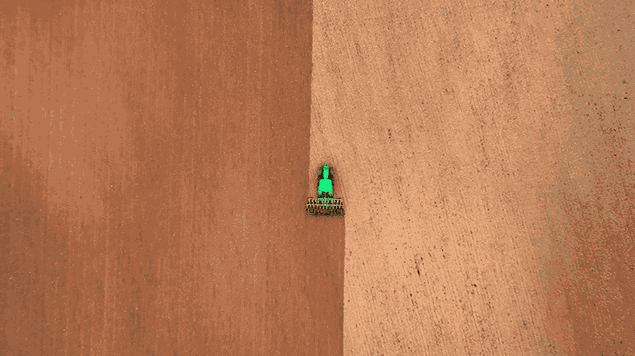
While working, it is important to maintain a straight path, minimize overlaps, and ensure a consistent depth. Plowing the soil properly does not mean rushing through the field, but rather working methodically so that the entire surface is prepared evenly.
Once the main work is complete, it is advisable to inspect the condition of the field and determine whether an additional pass for fine-tuning or leveling is necessary, depending on the crop and the final condition of the soil.
Working depth and adjustment of the agricultural implement
Working depth is one of the most critical factors when plowing the soil. If the implement works too shallowly, the job may not be thorough enough and fail to address compaction or soil preparation issues. However, if it works too deeply, fuel consumption increases, the tractor has to work harder, and the soil is disturbed more than is desirable.
That is why it is essential to adjust the implement properly. The settings must be adapted to the type of terrain, the task at hand, and the ultimate agronomic goal. A field with a lot of plant debris does not require the same settings as soil that only needs to be lightly tilled before planting.
Working with properly adjusted equipment improves consistency, reduces unnecessary strain on the machinery, and helps you plow the soil more efficiently and professionally.
Travel speed and tillage efficiency
Speed also has a significant impact on the final result. Excessive speed can compromise the quality of the work, cause irregularities, and lead to increased wear and tear on the equipment. Conversely, a speed that is too low reduces productivity and can make the operation less profitable.
When plowing the land, the most important thing is to find a pace that ensures stability, good penetration of the implement, and consistent work. This balance depends on the type of soil, the implement used, the tractor’s power, and the specific conditions of the field.
When you work at the right speed, not only does the quality of the finish improve, but you also maximize yield per hectare and make better use of each workday.
Common Mistakes When Plowing and How to Avoid Them
One of the most common mistakes when plowing is to proceed without taking the soil's moisture content into account. Starting too early or too late can ruin the results and negatively affect the soil structure.
Another common mistake is repeating unnecessary tasks or always working at the same depth. This can lead to internal compaction, increase operating costs, and hinder crop growth. It is also common to use a tool that is ill-suited to the field conditions, which reduces the effectiveness of the work and necessitates subsequent corrections.
Added to this, in many cases, is the lack of proper adjustment and maintenance of the machinery. Worn parts, incorrect settings, or poor planning of passes all contribute to a loss of efficiency and quality when plowing the land.
Avoiding these mistakes comes down to something very simple, though it’s not always put into practice: carefully observing the terrain, adapting your work to each situation, and using machinery designed to deliver consistent and reliable results.
Solutions for more efficient soil preparation in Solano Horizonte
If you want to till the soil with greater precision, improve the quality of your work, and tailor each task to the specific needs of your farm, having the right equipment makes a significant difference. At Solano Horizonte soil-tilling solutions designed to improve efficiency, uniformity, and profitability in the field.
Our team can help you find the right equipment based on your soil type, farming system, and operational needs. If you’re looking to optimize your soil preparation with reliable, professional solutions, contact Solano Horizonte find out which option is best suited for your farm.