Choosing the right
types of atomizer nozzles It is a much more important decision than it seems. In agricultural applications, the nozzle is not a minor component: it is the part that ultimately determines
how the broth is distributed, what droplet size is produced, and how the product reaches the vegetation. In other words, it influences
directly in the
treatment effectiveness, in coverage and also in reducing drift losses.
In woody crops, where vegetation varies greatly in volume, density, and shape depending on the species and stage of growth, choosing the right nozzle is key to tailoring the treatment to the actual needs of the field. It is not enough to simply have good application equipment; it is also necessary
adjust properly every component of the system, especially when working with
atomizers.
Next, we’ll review the function of nozzles, how they differ from other application systems, and what the main
types of atomizer nozzles used in agricultural treatments.
What is the function of nozzles in an agricultural sprayer?
In an agricultural sprayer, the nozzle is responsible for
transform the phytosanitary solution in
drip it and spread it based on specific conditions of pressure, flow rate, and air assistance. Its function is not only to spray the liquid, but to do so with a droplet size and spray pattern that allow it to reach the vegetation effectively.
That is why, when talking about
types of atomizer nozzles, what we're really talking about is application precision. The right nozzle helps improve coverage, facilitates penetration into the plant canopy, and reduces both product waste and the risk of drift.
In addition, the nozzle's performance is closely linked to the equipment as a whole. The flow rate, pressure, forward speed, and air stream from the sprayer must work in coordination for the treatment to be truly effective.
Differences Between Nozzles for Atomizers and Sprayers
Although they are often mentioned together, atomizer nozzles and
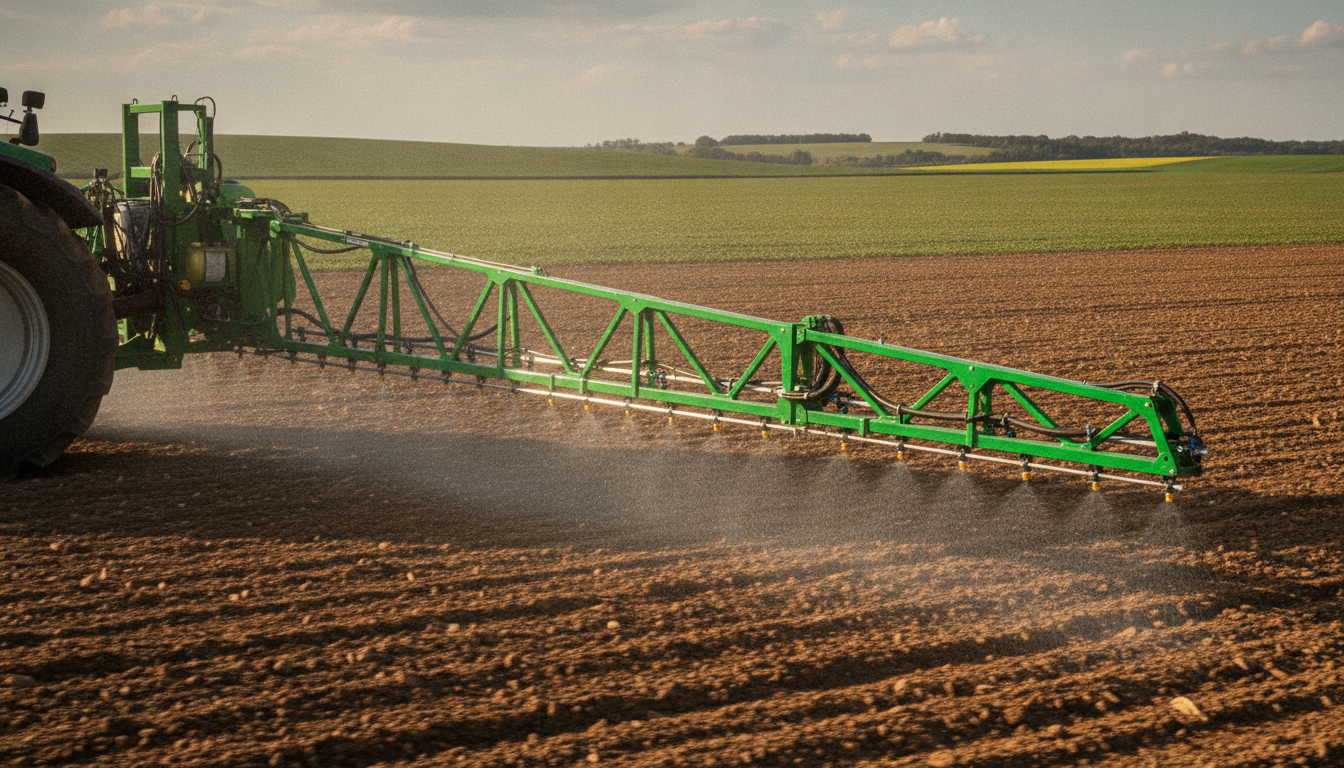
agricultural sprayers They do not exactly operate on the same principle. The main difference lies in the application system and the way the product reaches the crop.
With sprayers, the distribution of the spray mixture depends primarily on hydraulic pressure and the arrangement of the nozzles on the boom. In contrast, with atomizers, application also relies on an air stream that carries the droplets toward the vegetation. This means that the
types of atomizer nozzles should be selected taking into account not only the flow rate, but also the interaction with the air and the structure of the crop.
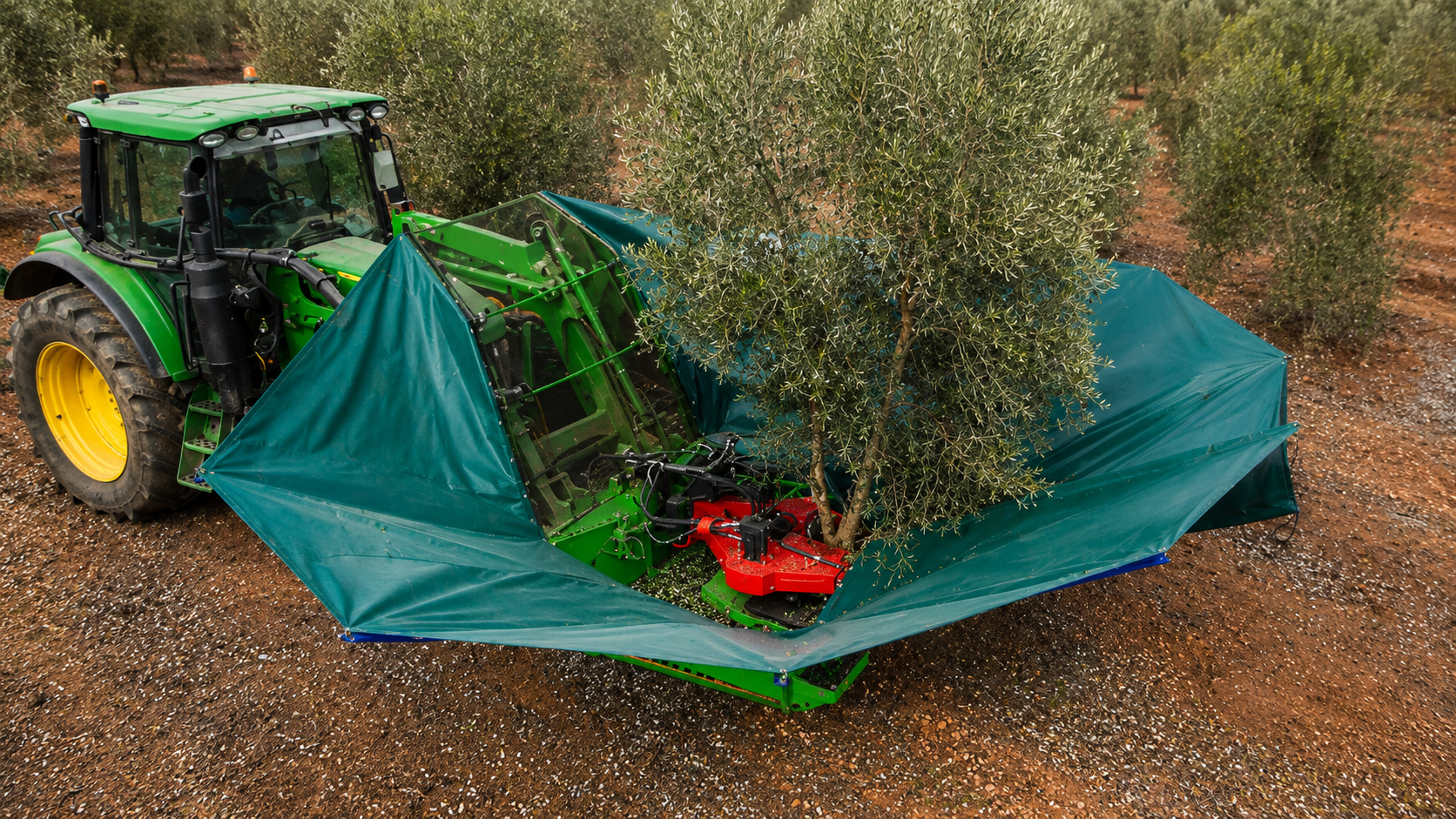
In woody crops such as vineyards, orchards, or olive groves, this difference is particularly important, since the vegetation does not present as a flat surface, but rather as a mass of plants with volume, density, and internal areas that must also be treated.
Main types of nozzles used in atomizers
Among the main
types of atomizer nozzlesThere are several configurations available to meet different application needs. The choice depends on the crop, the purpose of the treatment, the density of vegetation, and the environmental conditions under which the work is being carried out.
Hollow-cone nozzles for foliar applications
Hollow-cone nozzles are one of the most common options in agricultural spraying, especially for foliar applications. They are known for producing fine droplets and a spray pattern that ensures good coverage of leaves and shoots.
Among the
types of atomizer nozzlesThis option is generally suitable when the main objective is to ensure thorough coverage of the outer parts of the vegetation and achieve uniform spray distribution. It is frequently used in treatments where coverage quality is a priority.
However, since finer droplets are used, it is important to pay attention to wind, temperature, and humidity conditions, as choosing the wrong time to apply the spray can increase the risk of drift.
Full-cone nozzles for better penetration into the plant material
Full-cone nozzles provide a more concentrated spray pattern and may be useful when greater penetration through vegetation is desired. In certain situations, they help direct the spray more effectively toward the interior of the crop, which is particularly useful in dense vegetation.
Among the various
types of atomizer nozzles, full-cone nozzles can provide effective coverage when the crop has a higher leaf mass or when the treatment requires more consistent penetration into the plant.
When selecting a nozzle, it is essential to properly adjust the air flow and the application volume, as simply changing the nozzle is not enough if the rest of the equipment is not operating in balance.
Anti-drift nozzles for sprayers
Anti-drift nozzles are designed to reduce the formation of excessively fine droplets and minimize losses due to drift outside the target area. Their use has become increasingly important as technical and regulatory requirements for the application of treatments have grown.
Among the
types of atomizer nozzles, these nozzles are particularly useful when working in conditions where there is a higher risk of drift or when a more controlled and safer application is desired. They can be a good solution for sensitive fields, areas near other surfaces, or situations where extreme precision is required.
On properly configured equipment, such as
AS ST tractor-mounted atomizers, choosing anti-drift nozzles can help improve treatment efficiency without compromising adequate coverage.
Relationship between air flow nozzle and broth volume
One of the most important aspects of atomization is understanding that the nozzle does not operate in isolation. The actual effectiveness of the
types of atomizer nozzles depends on its relationship to the air flow rate and the volume of spray solution applied.
The nozzle determines the flow rate and droplet size, but it is the air that helps carry those droplets toward the vegetation. If there is an imbalance between these two factors, the treatment loses effectiveness. For example, too much air with droplets that are too fine can promote drift, while insufficient air flow can limit the product’s penetration into the crop.
Added to this is the spray volume, which must be adjusted to the crop’s growth stage, the type of treatment, and the crop structure. Therefore, when selecting the
types of atomizer nozzles...it's always a good idea to consider the application as a whole, rather than just a single component.
How to Choose the Right Nozzle for Woody Crops
Choosing between the different
types of atomizer nozzles This requires taking into account the crop, the amount of vegetation, the leaf density, and the treatment objective. A young, underdeveloped crop does not require the same settings as a plantation with a large amount of vegetation or one with more demanding penetration requirements.
It is also important to consider the stage of the growth cycle. As the crop structure changes, it may be necessary to adjust the nozzle type, flow rate, and application volume to maintain treatment quality.
Vineyard, orchard, and olive grove
In vineyards, orchards, and olive groves, the choice between the different
types of atomizer nozzles It must be adapted to the shape and density of the crop. In vineyards, for example, it is usually important to achieve good coverage of the vegetation without causing unnecessary losses. In fruit trees, where the canopy can be denser, greater penetration capacity may be required. In olive groves, the tree structure and the volume of foliage require precise adjustment of both the nozzle and the air flow.
For this reason, there is no single ideal nozzle for all woody crops. The correct approach is to adapt the choice to the type of plantation, the phenological stage, and the actual field conditions.
Common Mistakes When Choosing Atomizer Nozzles
One of the most common mistakes when working with
types of atomizer nozzles is choosing them solely out of habit or based on availability, without considering whether they are truly suited to the crop and the application method. It is also common to maintain the same configuration throughout the entire growing season, even as the crop canopy and application requirements change.
Another common mistake is failing to properly match the nozzle to the operating pressure, forward speed, or air flow of the equipment. In these cases, even a technically suitable nozzle can produce poor results due to a lack of overall adjustment.
It is also advisable to avoid using worn nozzles, mixing different types of nozzles on the same equipment, or configurations that do not ensure uniform distribution on both sides of the sprayer. All of these errors directly affect the effectiveness and quality of the treatment.
The Importance of Maintaining Spray Nozzles
Maintenance is an essential part of the performance of the
types of atomizer nozzles. Over time, nozzles wear out, altering their flow rate and changing the droplet size, which directly affects the quality of the application.
For this reason, it is advisable to periodically check their condition, verify the actual flow rate, replace damaged parts, and keep the system’s filters and lines clean. A nozzle in poor condition can lead to uneven treatments, over-application, or product loss, which ultimately affects both the crop and the profitability of the operation.
Performing this maintenance not only improves accuracy but also helps the equipment operate more reliably, safely, and efficiently throughout the growing season.
Spraying solutions tailored to each crop at Solano Horizonte
The right choice among the various
types of atomizer nozzles can make a clear difference in treatment quality, crop coverage, and application efficiency. Having equipment that is properly configured and adapted to actual working conditions allows us to optimize each operation and better meet the needs of woody crops.
At Solano Horizonte
spraying solutions designed to offer
accuracy,
reliability and performance in the field. If you're looking to improve your farming practices and choose the best setup for your farm, contact Solano Horizonte find out which solution best fits your needs.